

← アーカイブに戻るSHORT / 033
次元と位相描かれる過程を見る↗
32 Edges Reveal a 4D Cube
翻訳の準備中は英語の原文を表示しています。
作品について
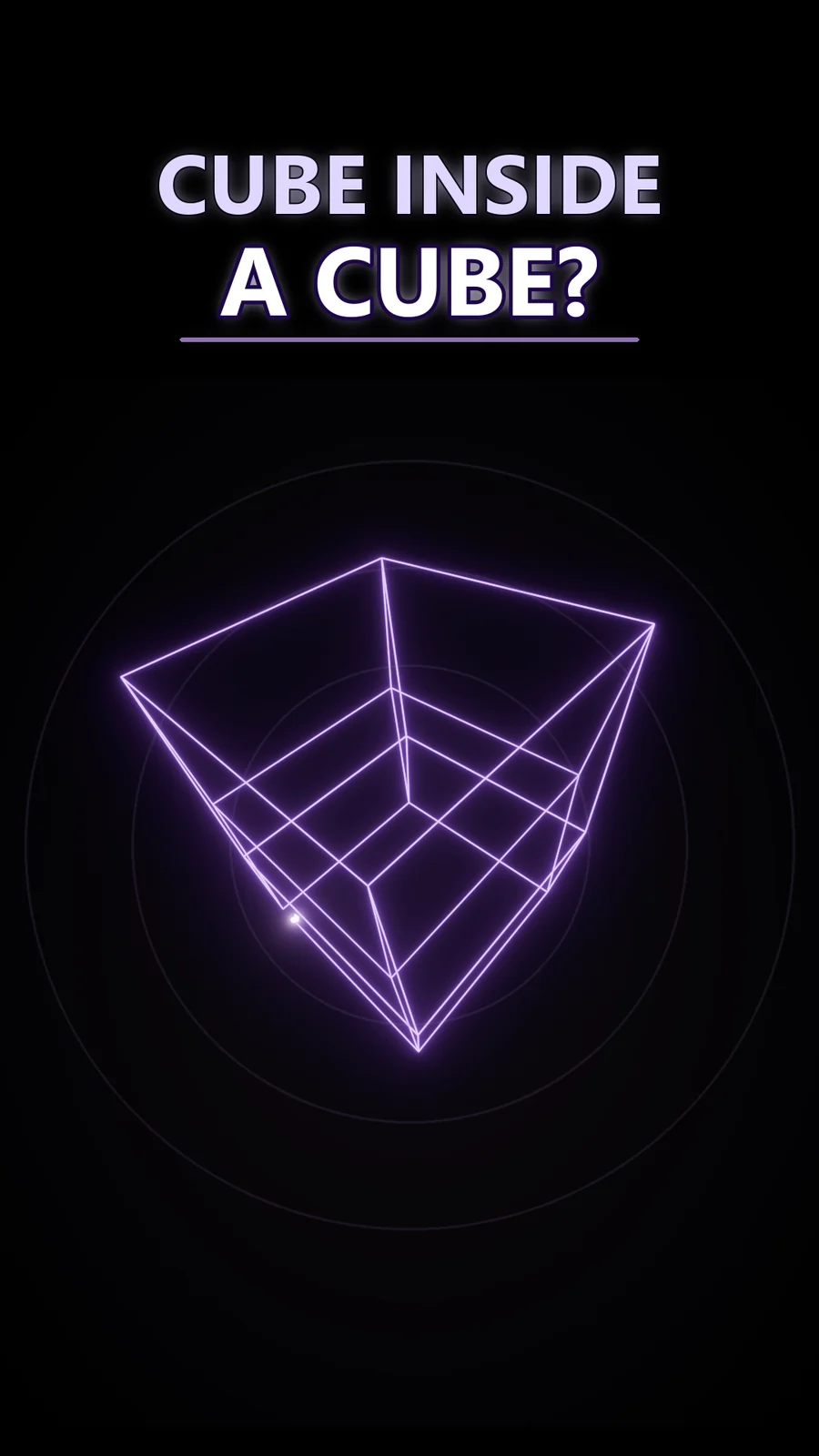
Can one continuous line reveal a four-dimensional cube?
A tesseract has 16 vertices and 32 edges. Each vertex is one of the 16 sign combinations (±1, ±1, ±1, ±1), and two vertices are connected when exactly one coordinate changes sign. The line traces every edge once before a 4D rotation and perspective projection turn the structure into the cube-within-a-cube form shown here. The complete construction appears in the video.
Artismathic turns equations into visual art—one function at a time.
Music: 'Taking Chances' by The Soundings
#MathArt #Tesseract #4DGeometry
作品を生み出す数式
WATCH IT COME TO LIFE
描かれる過程を見る
再生ボタンを押すとYouTubeを読み込みます。